
Lots of interesting abstracts and cases were submitted for TCTAP 2026. Below are the accepted ones after a thorough review by our official reviewers. Don’t miss the opportunity to expand your knowledge!
CASE20251107_027
Rendezvous-Assisted Endovascular Management of Heavily Calcified Superficial Femoral Artery Ostium Using Combined Rotational Atherectomy and Lithotripsy
By Chen Lun Su, Donna Shu-Han Lin, Kuan-Po Chiu
Presenter
Chen Lun Su
Authors
Chen Lun Su1, Donna Shu-Han Lin1, Kuan-Po Chiu1
Affiliation
Division of Cardiology, Department of Internal Medicine, Shin Kong Wu Ho-Su Memorial Hospital, Taipe, Taiwan1
View Study Report
CASE20251107_027
Endovascular - Iliac / SFA Intervention
Rendezvous-Assisted Endovascular Management of Heavily Calcified Superficial Femoral Artery Ostium Using Combined Rotational Atherectomy and Lithotripsy
Chen Lun Su1, Donna Shu-Han Lin1, Kuan-Po Chiu1
Division of Cardiology, Department of Internal Medicine, Shin Kong Wu Ho-Su Memorial Hospital, Taipe, Taiwan1
Clinical Information
Relevant Clinical History and Physical Exam
A 78-year-old woman with hypertension, type 2 diabetes mellitus, and hypothyroidism presented with progressive right lower limb claudication for one year, limiting walking distance to less than 200 meters and causing occasional nocturnal pain. Physical exam revealed diminished right femoral pulse without skin color change, ulceration, or rest pain, consistent with peripheral arterial disease.
Relevant Test Results Prior to Catheterization
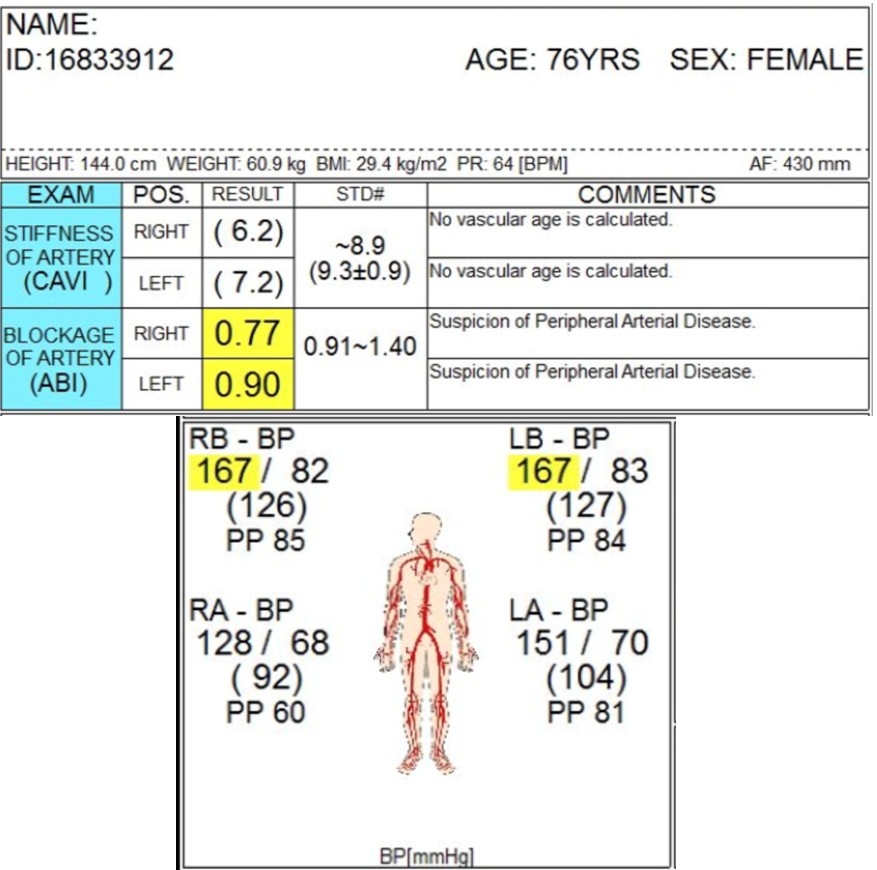
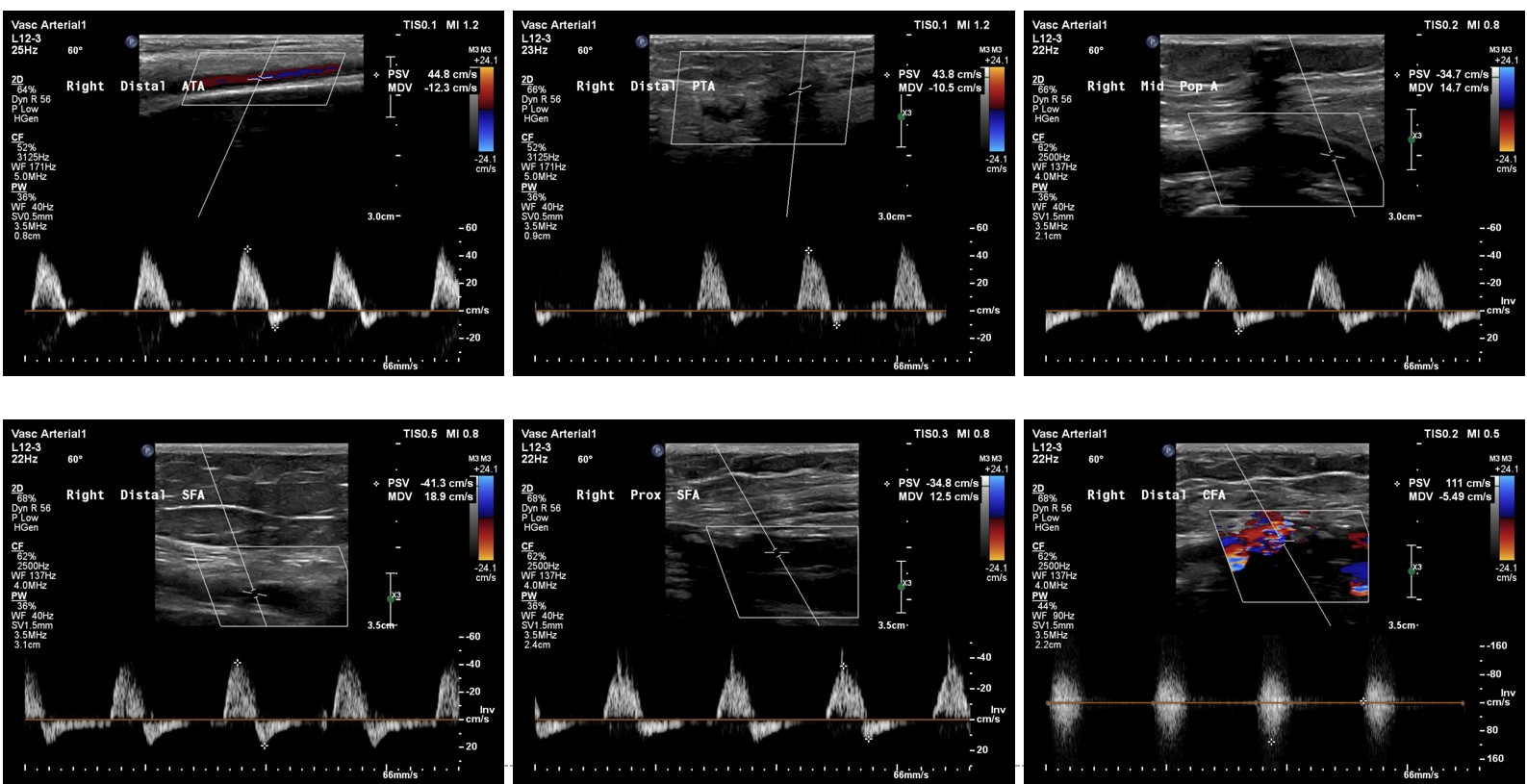
Ankle–brachial index was reduced on the right (0.77) and borderline on the left (0.90), suggesting peripheral arterial disease. CAVI values were within normal range, indicating preserved arterial elasticity. Duplex ultrasound revealed monophasic flow and reduced velocity at the right superficial femoral artery with preserved distal runoff, consistent with a hemodynamically significant proximal obstruction.
Relevant Catheterization Findings
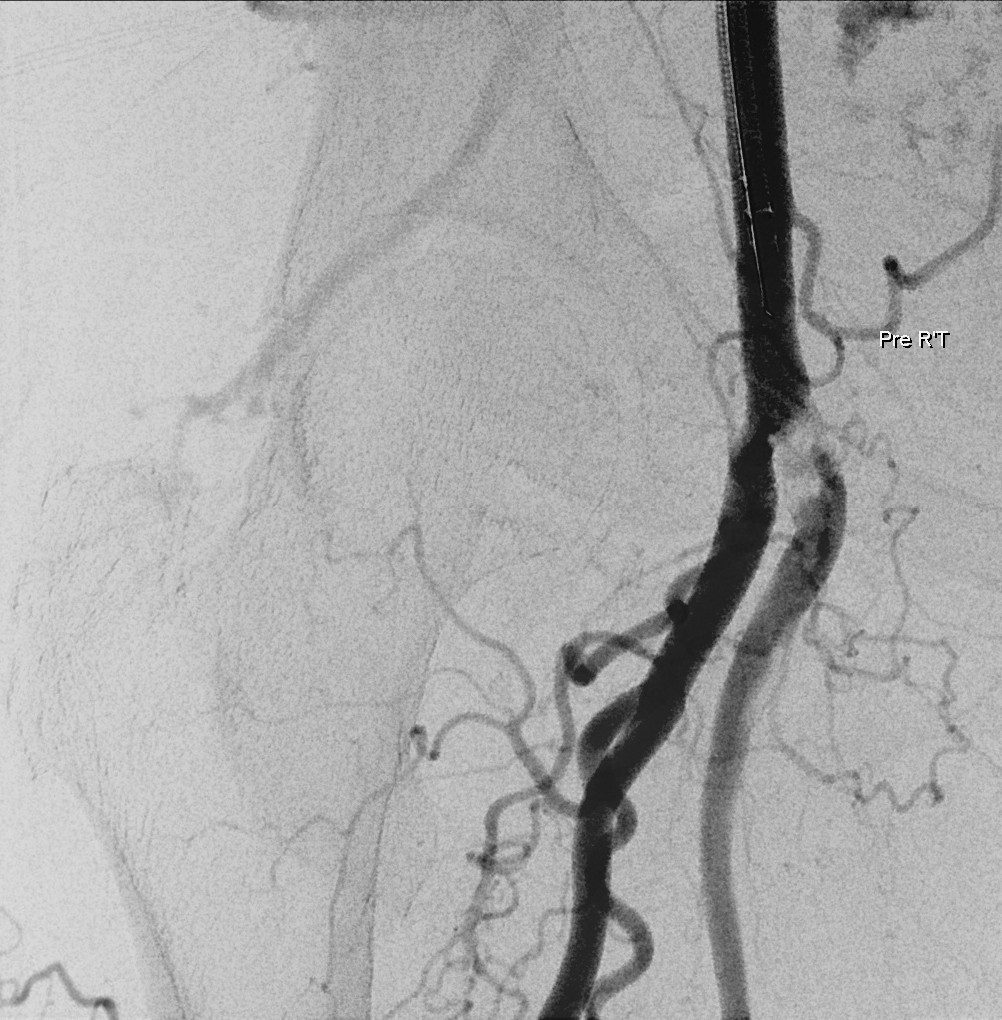
Left femoral artery accessed under ultrasound guidance. Coronary angiography showed patent LM and LAD, mild distal LCx and OM stenosis, and irregular RCA lumen. Right lower limb angiography revealed a stumpless chronic total occlusion at the superficial femoral artery ostium with collaterals from the profunda femoris. Distal runoff was maintained through patent popliteal and anterior tibial arteries.
Interventional Management
Procedural Step
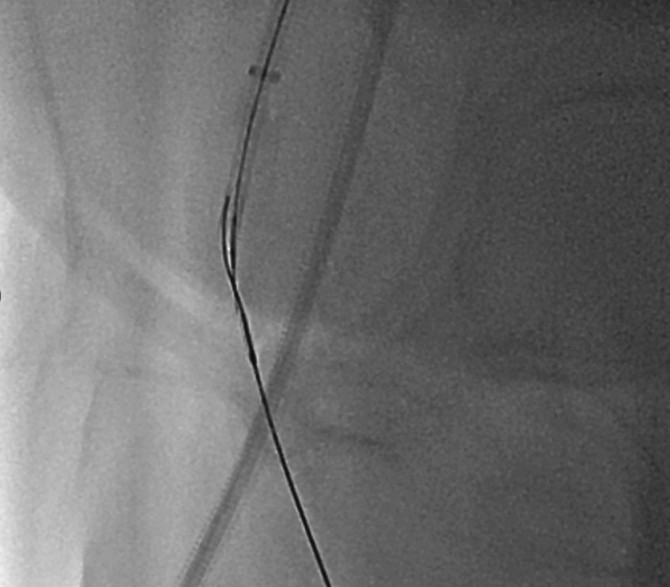
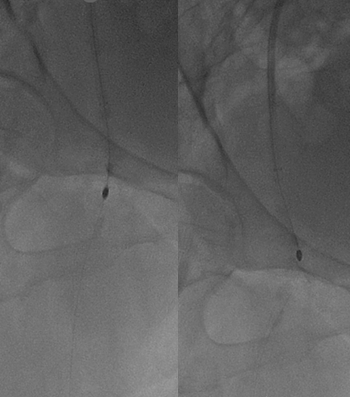
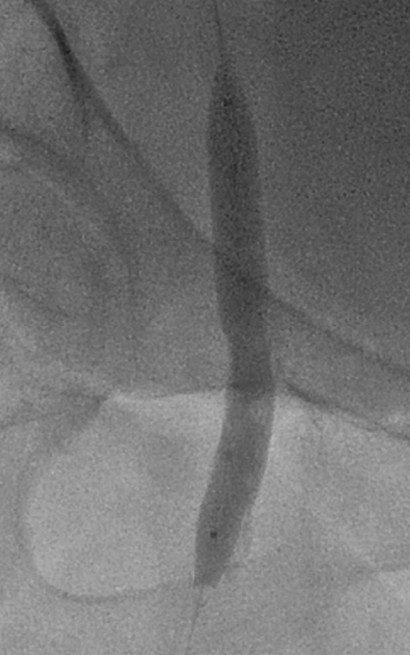
An antegrade approach was first attempted via left femoral access using an 8 Fr long sheath advanced to the right femoral artery. Despite multiple manipulations, the wire and microcatheter failed to cross the calcified lesion at the superficial femoral artery ostium. The wire could engage the plaque but was unable to advance through the dense calcium. A retrograde approach was then established by puncturing the proximal superficial femoral artery under ultrasound guidance. The connection between the retrograde and antegrade wires was confirmed under orthogonal fluoroscopy. Using a rendezvous technique, the retrograde wire was advanced into the antegrade guiding catheter and externalized through the contralateral sheath, creating a continuous guidewire pathway.After wire externalization, sequential intraplaque and extraplaque rotational atherectomy were performed to modify both deep and superficial calcium. This ablation provided effective vessel preparation using a small burr size, improving compliance while minimizing procedural risk. Intravascular lithotripsy was subsequently performed to further optimize vessel expansion.Final high-pressure dilation achieved full luminal gain, followed by drug-coated balloon angioplasty as the definitive therapy. The final angiogram demonstrated excellent vessel expansion, preserved bifurcation flow, and no evidence of dissection, perforation.
 16833912_033.mp4
16833912_034.mp4
16833912_037.mp4
16833912_033.mp4 16833912_034.mp4 16833912_037.mp4Case Summary
This case demonstrates the feasibility of combining dual-plane rotational atherectomy and intravascular lithotripsy to treat a heavily calcified superficial femoral artery ostial occlusion. The rendezvous technique enabled successful wire passage when the antegrade approach failed, allowing complete lesion modification and optimal luminal expansion without complications. This hybrid strategy provides an effective option for complex, calcified femoral bifurcation disease.