
Lots of interesting abstracts and cases were submitted for TCTAP 2026. Below are the accepted ones after a thorough review by our official reviewers. Don’t miss the opportunity to expand your knowledge!
CASE20251103_008
Experience of Percutaneous Coronary Intervention via the Ulnar Artery Approach
By Tomohiro Onishi, Akihiro Suzuki, Kento Kawaguchi, Atomu Tajima, Masahiro Shimoda, Hirofumi Ohashi, Hirohiko Ando, Yoriyasu Suzuki, Tetsuya Amano
Presenter
Tomohiro Onishi
Authors
Tomohiro Onishi1, Akihiro Suzuki1, Kento Kawaguchi1, Atomu Tajima1, Masahiro Shimoda1, Hirofumi Ohashi1, Hirohiko Ando1, Yoriyasu Suzuki1, Tetsuya Amano1
Affiliation
Aichi Medical University, Japan1
View Study Report
CASE20251103_008
Coronary - Vascular Access and Closure
Experience of Percutaneous Coronary Intervention via the Ulnar Artery Approach
Tomohiro Onishi1, Akihiro Suzuki1, Kento Kawaguchi1, Atomu Tajima1, Masahiro Shimoda1, Hirofumi Ohashi1, Hirohiko Ando1, Yoriyasu Suzuki1, Tetsuya Amano1
Aichi Medical University, Japan1
Clinical Information
Relevant Clinical History and Physical Exam
A 74-year-old man with a history ofhypertension and inferior myocardial infarction complicated by cardiac rupturereceived conservative therapy. In the chronic phase, myocardial viability wasconfirmed by TI/BMIPP scintigraphy, and elective PCI to the right coronaryartery was planned. The right radial artery was impalpable.
Relevant Test Results Prior to Catheterization
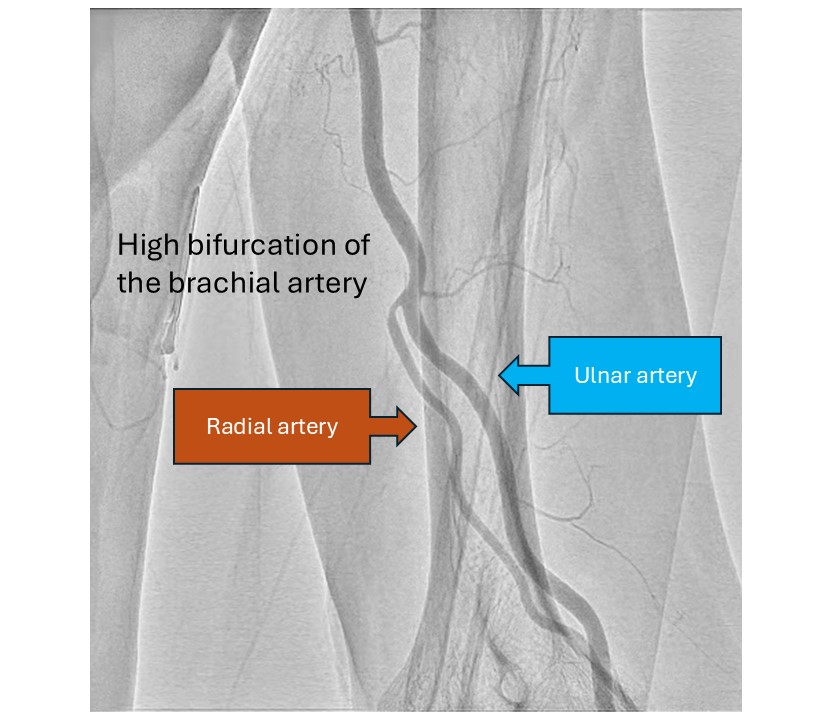
Pre-procedural vascular ultrasound revealeda high brachial bifurcation approximately 10 cm proximal to the antecubitalfossa and a small-caliber left radial artery. No significant calcification orstenosis was detected. Based on these findings, the left ulnar artery wasselected as the access route.
Relevant Catheterization Findings
Using the left ulnar artery approach,coronary angiography demonstrated a chronic total occlusion in the mid rightcoronary artery with collateral flow from the left system. No complicationsoccurred during sheath insertion, catheter manipulation, or hemostasis.
Interventional Management
Procedural Step
After local anesthesia, the left ulnarartery was punctured under ultrasound guidance, and a 6 Fr sheath was insertedsmoothly. Coronary angiography confirmed a chronic total occlusion of themid-RCA. A 6 Fr guiding catheter was advanced via the ulnar approach withoutdifficulty. PCI was performed with a standard antegrade wire escalationtechnique, followed by balloon dilatation and drug-eluting stent implantation.Final angiography showed optimal stent expansion and TIMI 3 flow. Hemostasiswas achieved using a compression device without complications.
This case exemplifies the advantage of pre-procedural ultrasound assessment inidentifying vascular anomalies and guiding the optimal choice of access site.The presence of high brachial bifurcation and small-caliber radial artery wouldhave increased the risk of arterial injury or catheter failure if a radialapproach had been used. The ulnar approach provided sufficient vessel diameterand procedural stability.
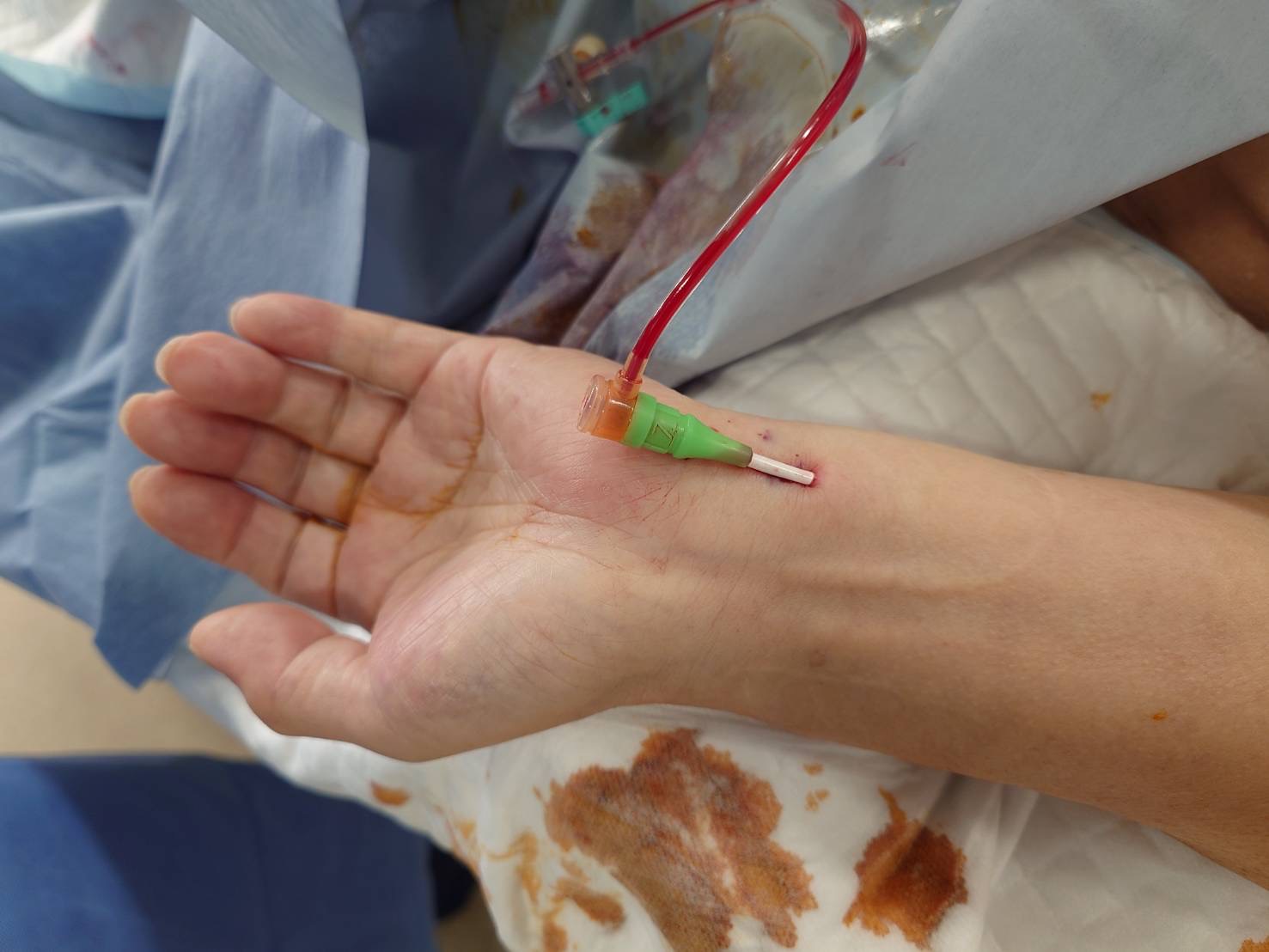
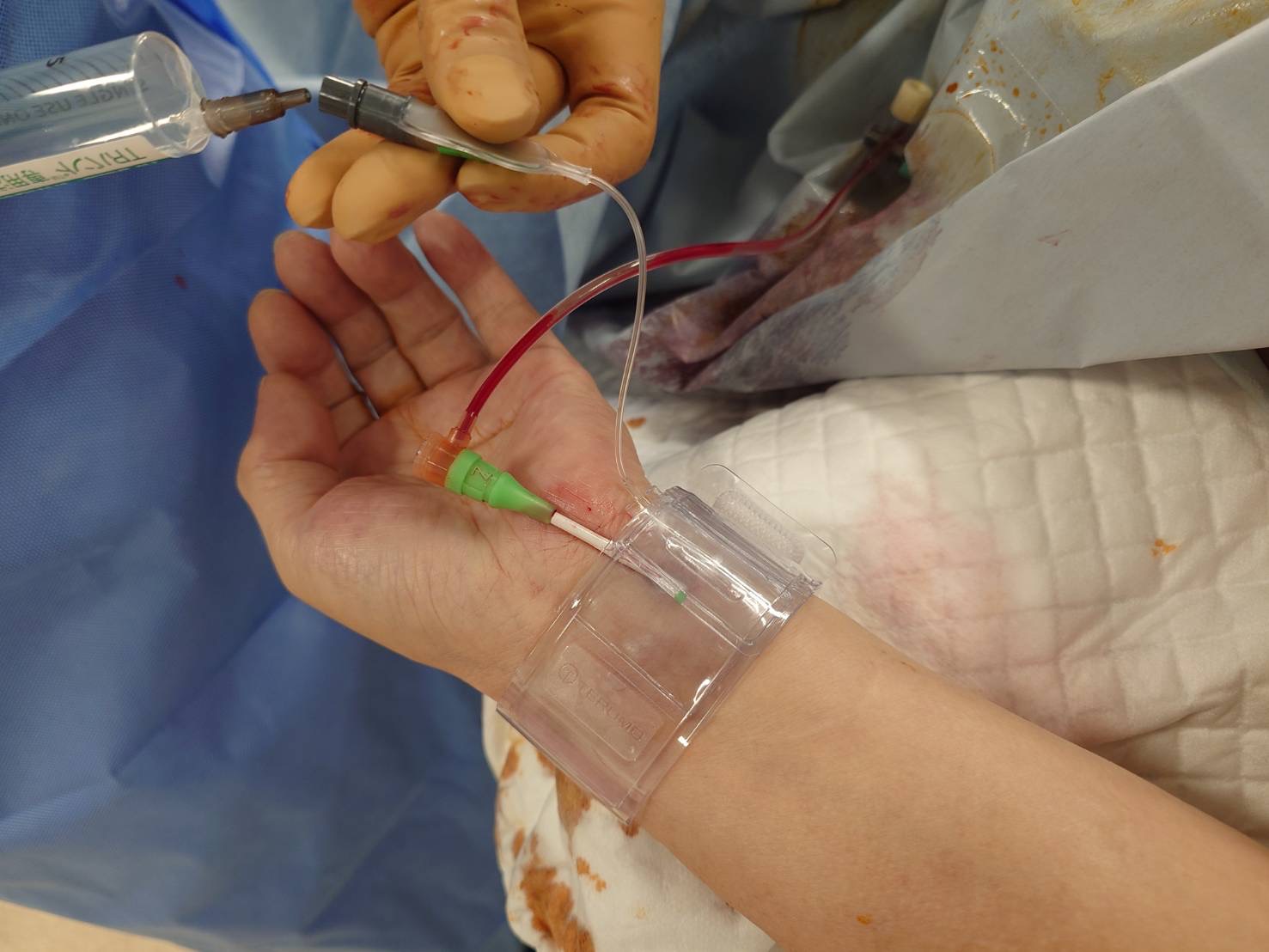
This case exemplifies the advantage of pre-procedural ultrasound assessment inidentifying vascular anomalies and guiding the optimal choice of access site.The presence of high brachial bifurcation and small-caliber radial artery wouldhave increased the risk of arterial injury or catheter failure if a radialapproach had been used. The ulnar approach provided sufficient vessel diameterand procedural stability.
Case Summary
Pre-proceduralultrasound evaluation of the upper limb arteries enables detection ofanatomical variations such as high brachial bifurcation and facilitates safeand effective selection of the access site. The ulnar artery can serve as areliable alternative when the radial artery is unsuitable, reducing the needfor brachial or femoral access and associated complications.