
Lots of interesting abstracts and cases were submitted for TCTAP 2026. Below are the accepted ones after a thorough review by our official reviewers. Don’t miss the opportunity to expand your knowledge!
ABS20251101_0002
Unveiling a Novel Protective Role of Neutrophils Against Bleeding in Acute Coronary Syndrome: A Multicenter Cohort Study
By Kailun Yan, Guyu Zeng, Kexin Zhang, Menglu Liu, Fanyong Xu, Jinqing Yuan, Xueyan Zhao
Presenter
Kailun Yan
Authors
Kailun Yan1, Guyu Zeng1, Kexin Zhang1, Menglu Liu1, Fanyong Xu1, Jinqing Yuan1, Xueyan Zhao1
Affiliation
Fuwai Hospital, CAMS & PUMC, China1
View Study Report
ABS20251101_0002
ACS/AMI
Unveiling a Novel Protective Role of Neutrophils Against Bleeding in Acute Coronary Syndrome: A Multicenter Cohort Study
Kailun Yan1, Guyu Zeng1, Kexin Zhang1, Menglu Liu1, Fanyong Xu1, Jinqing Yuan1, Xueyan Zhao1
Fuwai Hospital, CAMS & PUMC, China1
Background
Balancing ischemic and bleeding risks remains a central challenge in acute coronary syndrome (ACS) management. While neutrophils are established mediators of inflammation and atherothrombosis, emerging evidence reveals their novel capacity for promoting haemostasis through migration trails enriched with coagulation factors. This paradigm-shifting discovery suggests a previously unrecognized protective role of neutrophils against bleeding. Nevertheless, whether baseline neutrophil count is independently associated with a reduced short-term and long-term risk of bleeding in ACS patients remains unexplored in real-world clinical settings.
Methods
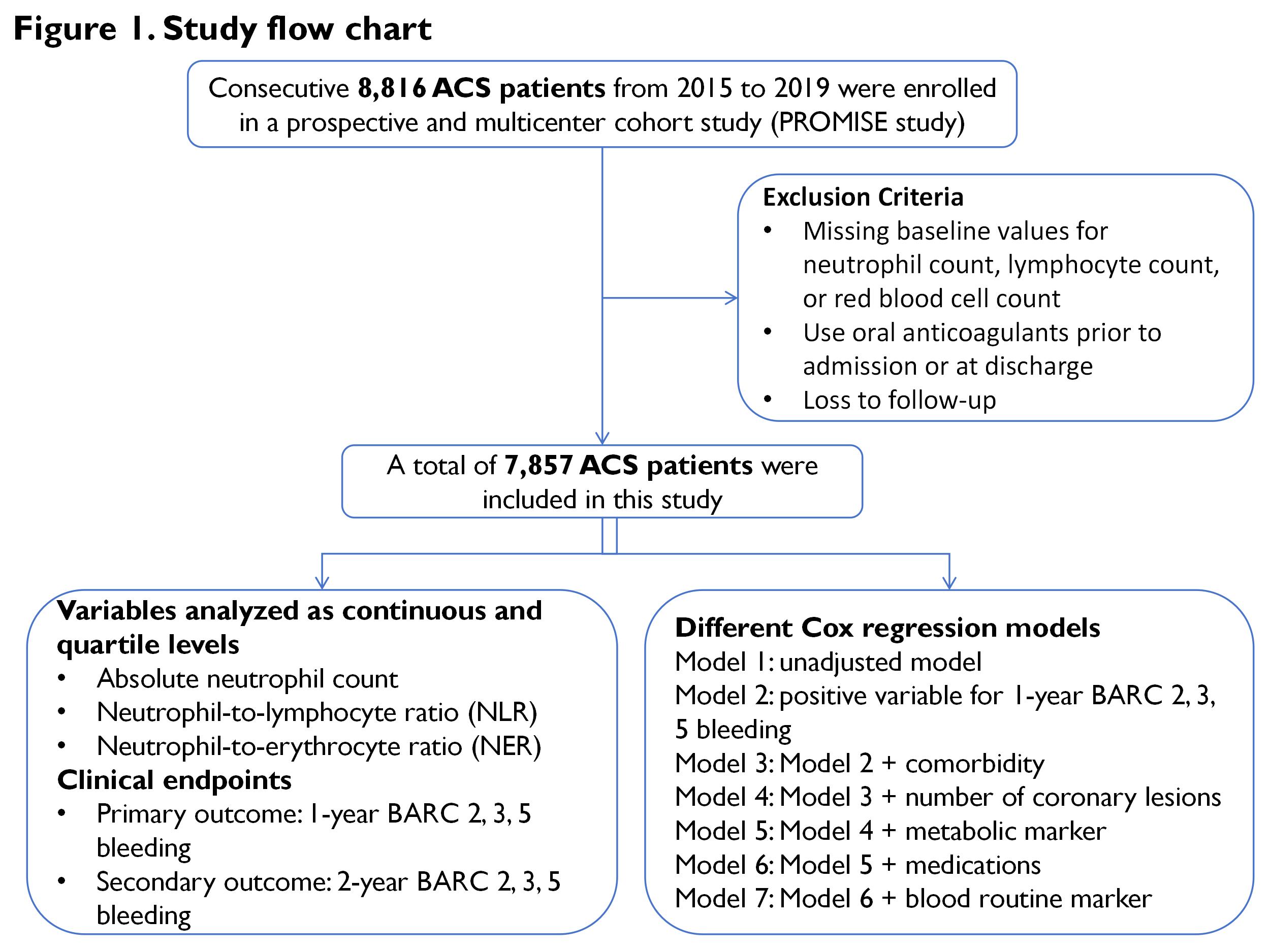
This study is a secondary analysis of a large, prospective, multicenter observational cohort in China. From 2015 to 2019, a total of 8,816 consecutive patients with ACS were enrolled and followed for 2 years (Figure 1). The absolute neutrophil count and its derived ratios, the neutrophil-to-lymphocyte ratio (NLR) and neutrophil-to-erythrocyte ratio (NER), were analyzed as both continuous and categorical (quartiles) variables. The primary endpoint was Bleeding Academic Research Consortium (BARC) types 2, 3, or 5 bleeding at 1 year, with 2-year bleeding as the secondary endpoint. Multivariable Cox proportional hazards models were used to adjust for relevant clinical covariates including platelet and hemoglobin.
Results
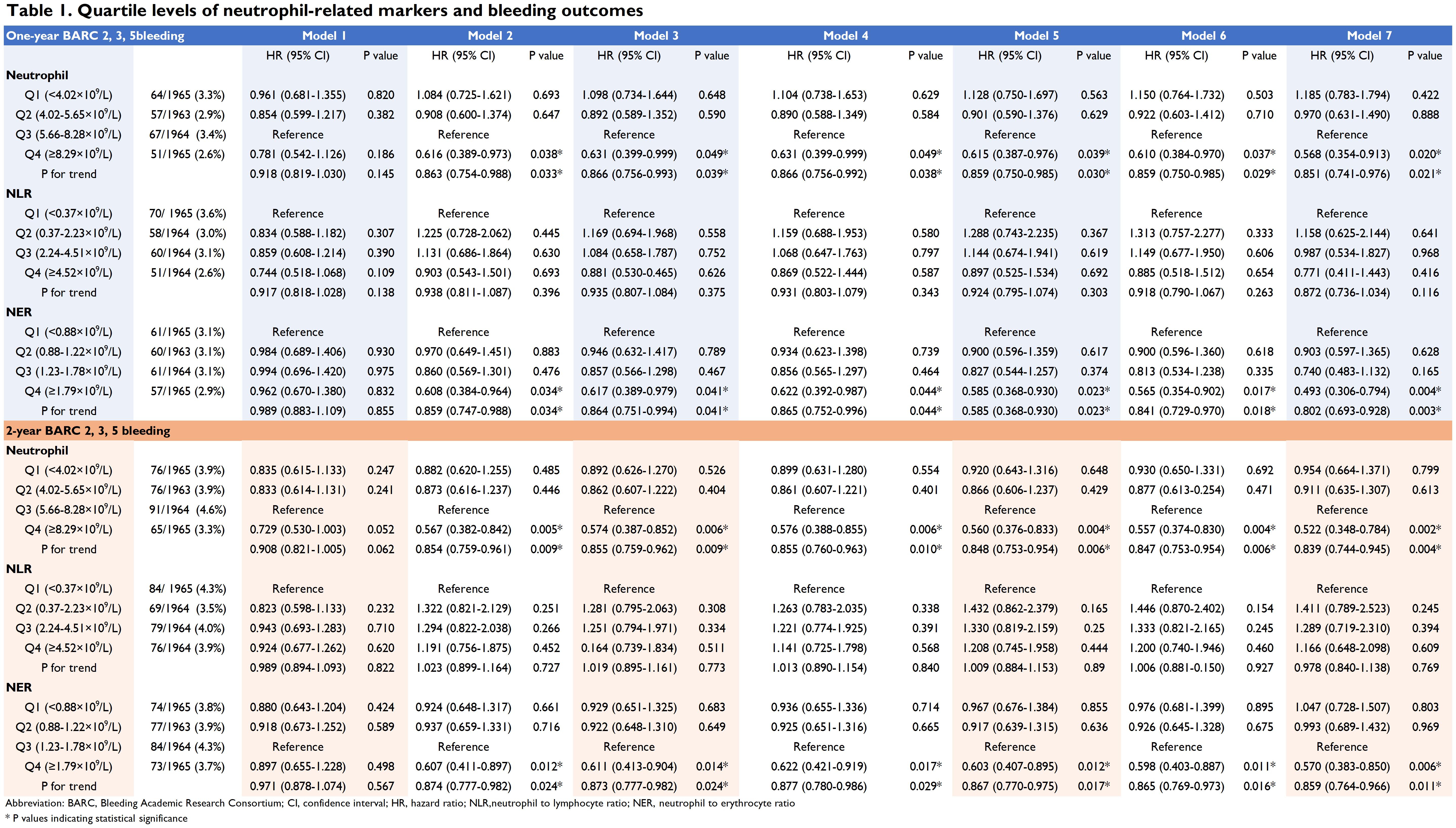
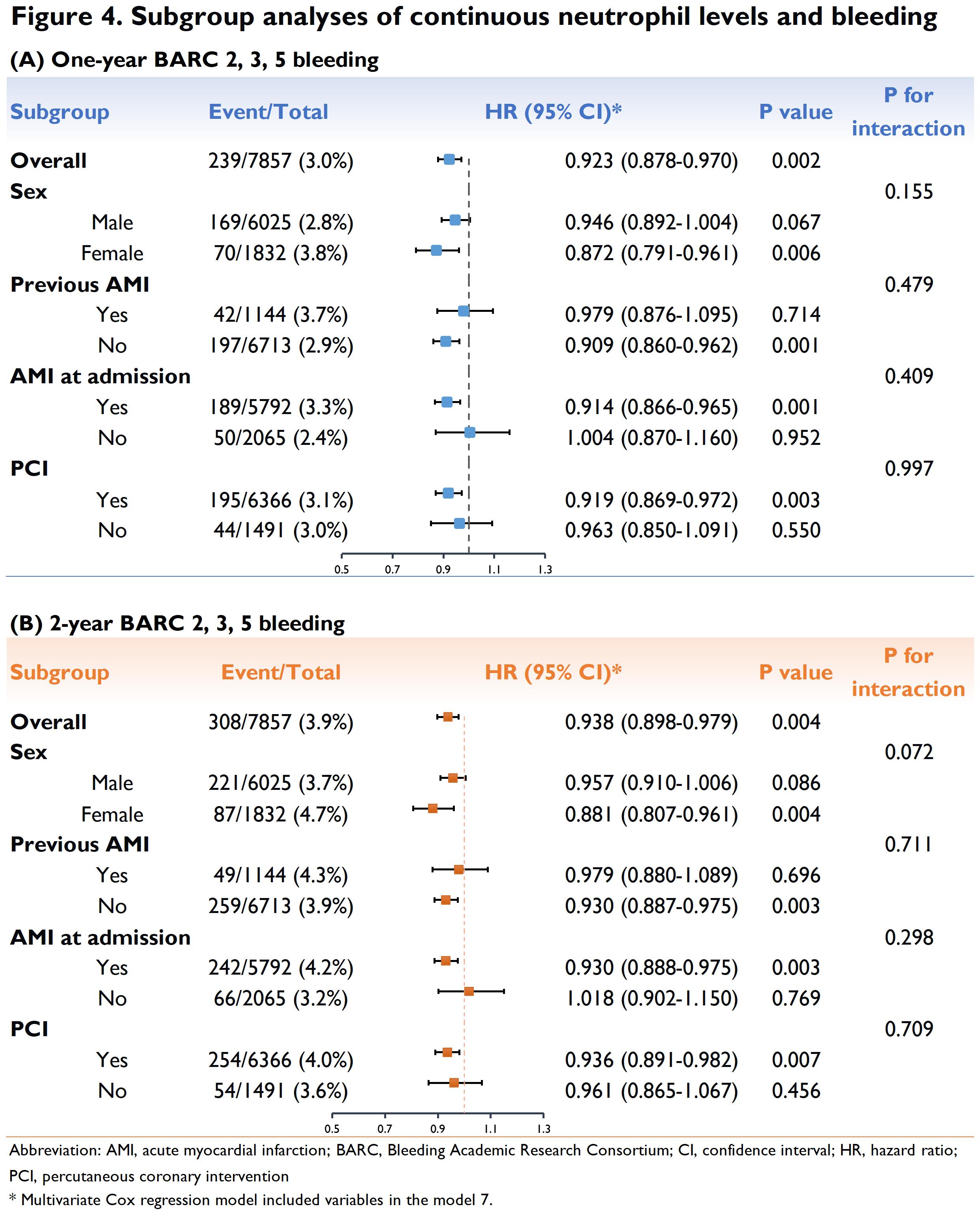
After excluding patients with missing baseline or follow-up data and those on oral anticoagulants, the final analytical cohort comprised 7,857 ACS patients. The study population had a mean age of 60.9 ± 11.4 years and was predominantly male (76.7%). During the follow-up period, 239 patients (3.0%) experienced BARC types 2, 3, or 5 bleeding events at 1 year, with the cumulative incidence increasing to 308 patients (3.9%) by 2 years. Restrictive cubic splines demonstrated a significant inverse association between neutrophil, NLR, NER, and the risk of 1- and 2-year bleeding (all p < 0.05) (Figure 2). In the fully adjusted Cox models, when analyzed as continuous variables, neutrophil, NLR, and NER were all independently associated with a reduced risk of 1-year and 2-year BARC 2, 3, 5 bleeding (Figure 3). When analyzed by quartiles, patients in the highest quartile (Q4) of absolute neutrophil count demonstrated substantially lower risks of bleeding, with hazard ratios of 0.568 (95% CI 0.354-0.913) for 1-year bleeding and 0.522 (95% CI 0.348-0.784) for 2-year bleeding (Table 1). Similarly, the highest quartile of NER was associated with reduced 1-year (HR 0.493, 95% CI 0.306-0.794) and 2-year bleeding risks (HR 0.570, 95% CI 0.383-0.850). Subgroup analyses confirmed the consistency of this inverse association across key subgroups (all p for interaction > 0.05) (Figure 4).

Conclusion
In a large multi-center ACS cohort, an elevated baseline neutrophil count was independently associated with a significantly reduced risk of short-term and long-term BARC 2, 3, 5 bleeding. This finding provides clinical evidence supporting the novel concept of neutrophil-mediated haemostatic protection in ACS patients. The neutrophil count may thus serve as a readily available biomarker to identify patients at lower bleeding risk, potentially informing more personalized antithrombotic strategies.